William V. Slaton
Engineering Physics Coordinator & Professor
Dept of Physics, Astronomy, & Engineering
The success of any university requires the leadership and time of devoted faculty. Here are a few of the service projects to which I devote my time that have a large impact on our students and university.
Select service projects
Advancement of Undergraduate Research in the Sciences
The AURS fund was established to support undergraduate research in the College of Natural Sciences and Mathematics at the University of Central Arkansas. We believe that engaging undergraduates in fundamental research prepares them for graduate or professional school as well as enhancing their undergraduate education.
Not only do our undergraduates perform original research with a faculty mentor, they also present that research at local, regional, and national professional meetings and are coauthors on publications about their research. Our undergraduates have gone on to be successful in their careers upon graduation due in part to these experiences with our faculty.
FIG. 1 — UCA Foundation
STEM Posters at the Arkansas State Capitol
Science, Technology, Engineering, and Mathematics undergraduates from colleges and universities across the state of Arkansas talk about their scientific work in layman's terms to elected state officials, the media, the general public, as well as other undergraduates and faculty.
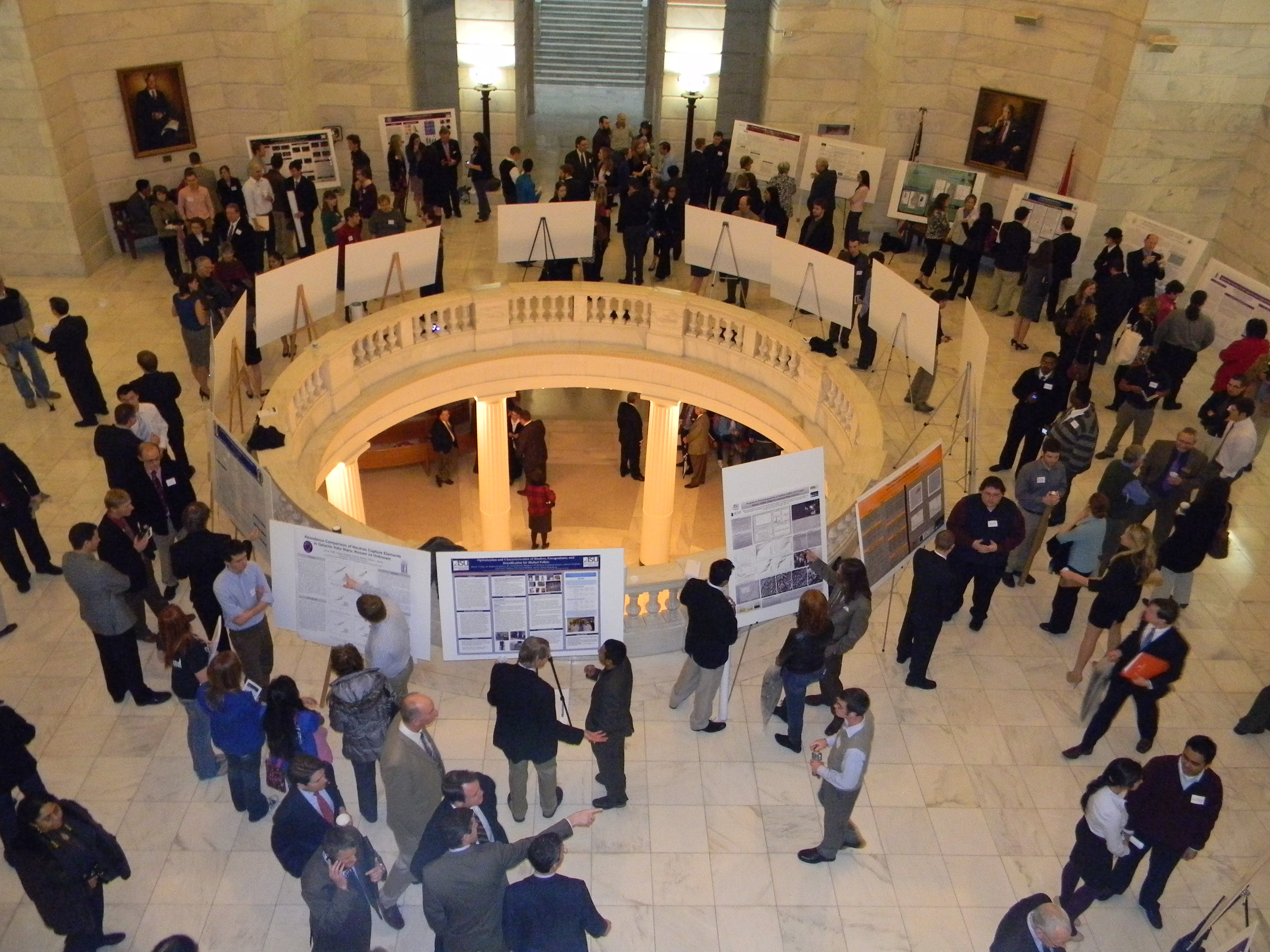
FIG. 2 — Capitol rotunda, 2012.
Editor, Journal of Undergraduate Reports in Physics and Astronomy
JURPA is a peer-reviewed, online journal of the Society of Physics Students and Sigma Pi Sigma, the physics honor society. It is devoted to archiving scholarly works conducted by undergraduate students in physics, astronomy, and related fields — a vehicle for the exchange of ideas among undergraduates and a way for faculty to share work conducted by their students. Papers in experimental physics, theoretical physics, or physics education research are welcome.
FIG. 3 — JURPA cover.
AI Robotics & Ethics AEGIS Camp
The AI Robotics & Ethics AEGIS camp at the University of Central Arkansas is a one-week commuter program that provides students with hands-on learning opportunities in artificial intelligence, machine learning, and robotics, with an emphasis on the moral and ethical dimension of this technology.
During the week, student teams learn programming and hardware skills to build and test machine learning algorithms that train and autonomously test-drive a robot car. The week culminates in a competition where the teams showcase what they have learned. Students also engage with AI and robotics topics in popular culture through movies and short stories, to understand the moral and ethical dimension of this rapidly developing technology.

FIG. 4 — AEGIS camp.